
A single marketplace app can generate more revenue than most retail chains can build in a decade. Global ecommerce sales will near $39.7 trillion in 2026, per Grand View Research. That shift did not happen by accident. Amazon built an empire by letting third-party sellers list products under one roof, Airbnb turned spare rooms into a hospitality industry, Uber connected drivers and riders without owning a single car, and Etsy gave independent makers a storefront they could never have built on their own.
Each of these companies proves the same point: a well-built marketplace app does not just sell a product; it builds an entire economy around itself, and that is exactly why custom app development services built for marketplaces are in such high demand right now. Amazon, Airbnb, Uber, and Etsy prove that marketplace app development builds entire economies, not just products. That growth makes understanding the marketplace app development cost essential before choosing custom app development services.
What is Marketplace App Development?
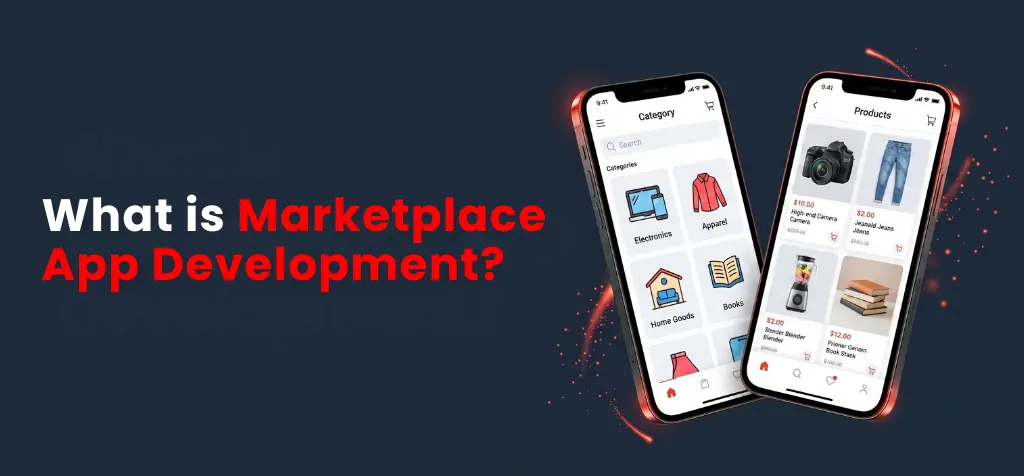
Marketplace app development is the process of building a platform that connects buyers and sellers within one digital space, letting multiple vendors list products or services while a single admin system manages everything. Ecommerce marketplace app development can be built natively or through frameworks like Ionic app development for faster cross-platform delivery.
At its core, marketplace application development revolves around three connected panels. Each panel serves a different user type, yet they work together to keep the buyer-seller marketplace running smoothly from browsing to checkout to vendor payouts.
Buyer Panel
The buyer panel lets users search products, compare sellers, apply filters, add items to cart, and complete secure checkout. It focuses on smooth navigation, quick loading, and clear product listings that keep shoppers engaged and returning.
Seller Panel
The seller panel gives vendors a dedicated space to list products, manage inventory, track orders, and monitor earnings. It gives sellers control over their storefront while staying connected to the wider buyer-seller marketplace.
Admin Dashboard
The admin dashboard oversees the entire platform, handling vendor approvals, commission tracking, dispute resolution, and analytics. It keeps buyers and sellers accountable while giving platform owners full visibility into daily marketplace activity.
Read More: Application Development Process, Types and Benefits
Marketplace App Development Cost Breakdown
Marketplace app development pricing depends on features, platform, and complexity. Understanding a proper marketplace app development cost estimate before you start helps avoid budget surprises, whether you build a simple listing app or an AI-powered enterprise platform.
Basic Marketplace App
A basic marketplace mobile app development cost typically ranges from $40,000 to $80,000. It includes core features like product listings, simple checkout, and buyer registration, ideal for startups testing an idea before growing into a full platform.
| Feature | Included | Estimated Cost |
|---|---|---|
| Product listings and search | Yes | $8,000 to $15,000 |
| User registration and login | Yes | $5,000 to $10,000 |
| Basic checkout and payment | Yes | $10,000 to $18,000 |
| Admin panel | Basic version | $7,000 to $12,000 |
| Total | $40,000 to $80,000 |
Medium Complexity App
A medium-complexity build costs between $80,000 and $200,000. This tier adds advanced search filters, vendor dashboards, order tracking, and Flutter app development for cross-platform reach without doubling the engineering team.
| Feature | Included | Estimated Cost |
|---|---|---|
| Advanced search and filters | Yes | $12,000 to $20,000 |
| Vendor management dashboard | Yes | $20,000 to $35,000 |
| Payment gateway integration | Multiple options | $15,000 to $25,000 |
| Push notifications | Yes | $6,000 to $10,000 |
| Total | $80,000 to $200,000 |
Enterprise Marketplace
Enterprise marketplace platforms cost $250,000 and up. These builds rely on artificial intelligence for recommendations and fraud detection, real-time analytics, and secure infrastructure built to handle high transaction volume across regions.
| Feature | Included | Estimated Cost |
|---|---|---|
| AI powered recommendations | Yes | $30,000 to $60,000 |
| Real time analytics dashboard | Yes | $25,000 to $45,000 |
| Multi vendor order management | Yes | $35,000 to $60,000 |
| Advanced security and compliance | Yes | $30,000 to $50,000 |
| Total | $250,000 to $500,000+ |
Key Features That Influence Marketplace App Development Cost
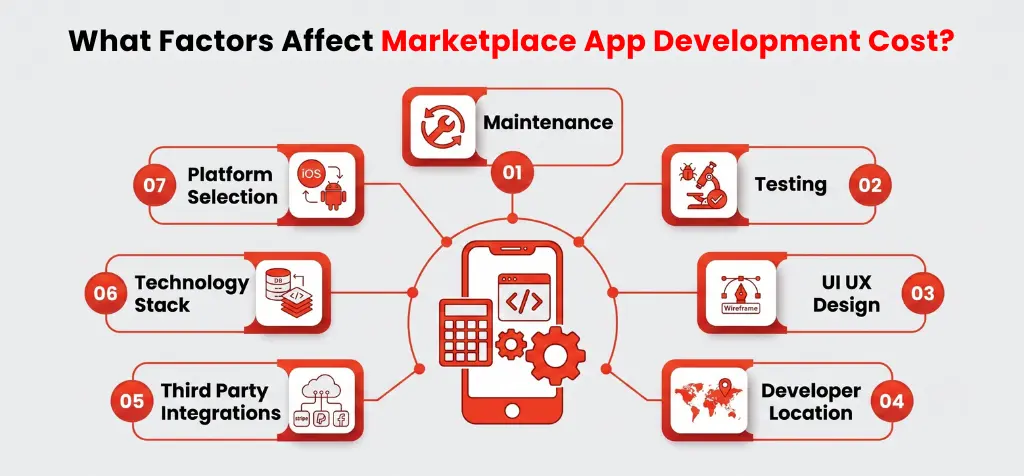
The cost to build a marketplace app changes based on several choices a business makes early on. Every decision, from platform to maintenance, shifts the marketplace app development cost up or down depending on complexity and long-term goals.
Platform Selection
Choosing between Android app development, iOS app development, or both affects price directly. Native mobile apps offer better performance but cost more, while cross-platform apps built once for multiple platforms often reduce budgets and development time considerably.
Technology Stack
The framework a team picks shapes both cost and speed. Flutter app development and React Native app development are popular for cross-platform projects, while Ionic app development suits simpler apps needing quicker, budget-friendly builds.
UI UX Design
A clean, intuitive interface takes real design hours to get right. Simple layouts cost less, while custom animations, onboarding flows, and personalized dashboards for buyers and sellers add noticeably to the final price.
Third-Party Integrations
Payment gateways, maps, chat systems, and analytics tools all require integration work. Each added service increases development time and cost, especially when multiple providers need to work smoothly together within one marketplace app.
Developer Location
Where a development team is based changes hourly rates significantly. Developers in the United States or Western Europe typically charge more than teams in South Asia or Eastern Europe, directly affecting total project cost.
Testing
Quality assurance across devices, operating systems, and user scenarios takes real time and resources. Thorough testing catches bugs early, but it adds weeks to timelines and increases overall marketplace app development cost before launch.
Maintenance
Launching an app is just the beginning of ongoing costs. Regular updates, bug fixes, server upkeep, and security patches require continued investment, and businesses should budget for maintenance long after the initial build is complete.
Read More: Top Benefits of Custom Mobile App Development
Marketplace App Cost by Business Type
B2B Marketplace
B2B marketplace apps need strong catalog management, bulk ordering, and custom pricing tiers, pushing costs higher than typical consumer stores. Businesses usually hire marketplace app developers experienced in ERP integrations to connect procurement systems and vendor accounts smoothly.
Healthcare Marketplace
Healthcare marketplace apps must meet strict compliance standards, secure patient data, and support appointment booking. A trusted healthcare app development company adds cost through encryption, HIPAA compliance, and integration with insurance or pharmacy systems.
Rental Marketplace
Rental marketplace apps need booking calendars, damage protection, and payment escrow features, all of which raise development costs. Choosing between Flutter vs React Native for cross-platform builds also affects the final budget.
Service Marketplace
Service marketplace apps rely on scheduling tools, in-app messaging, and location-based matching to connect providers with customers. A mobile app development company USA can add emerging technologies like AI matching to improve accuracy.
Real Estate Marketplace
Real estate marketplace apps require property listings, virtual tours, and mortgage calculators, adding to the overall build cost. Partnering with a real estate app development company ensures accurate mapping and legal document handling.
Food Marketplace
Food marketplace apps depend on live order tracking, delivery routing, and vendor menus that update in real time. Integration with a food industry ERP system raises costs but improves inventory accuracy across restaurants.
Read More: A Beginners Guide to iPhone App Development
Why Choose American App Coder for Marketplace App Development?
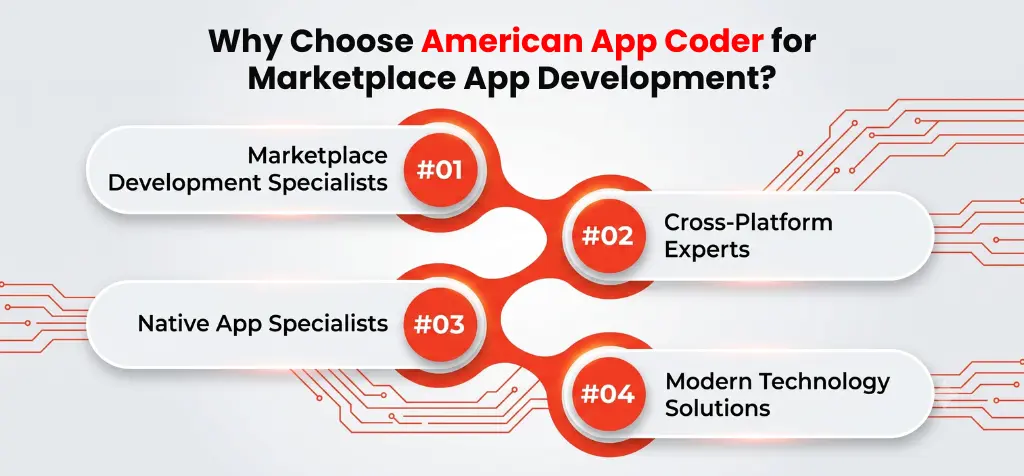
American App Coder creates secure, high-performance marketplace applications designed around business goals, customer experience, and long-term growth.
Marketplace Development Specialists
The team focuses on marketplace app development services built for real business models, covering vendor management, order flow, payments, and search filters, so when you hire mobile app developers, every feature works together instead of feeling like separate add-ons.
Cross-Platform Experts
Using Flutter, React Native, and Ionic, the team builds cross-platform apps that run smoothly on Android and iOS from a single codebase, helping businesses launch faster without doubling their development budget.
Native App Specialists
For businesses that need maximum speed and device integration, the team offers native mobile apps built separately for Android app development and iOS app development, giving each platform its own optimized performance.
Modern Technology Solutions
The team stays current with emerging technologies, including AI recommendations and cloud-based infrastructure, so marketplace apps launched today are ready to grow alongside customer expectations and industry trends.
Read More: 10 Useful Tips for a Successful Mobile Application
Final Thoughts
Marketplace app development delivers strong ROI when built with the right features, since platforms like Amazon and Airbnb show that connecting buyers and sellers drives customer growth and steady revenue without owning inventory or heavy overhead.
The future belongs to businesses that invest early in a well-planned marketplace app. American App Coder helps turn that vision into a working, profitable platform, so reach out today to start building yours.
Frequently Asked Questions
Most marketplace apps cost between $15,000 and $150,000, depending on features, platform choice, and vendor management complexity.
Starting with an MVP on a single platform using cross platform tools like Flutter keeps initial costs lowest.
Flutter suits fast, visually rich apps, while React Native works well for teams needing wider community support and libraries.
A basic marketplace app takes three to five months, while advanced platforms with AI features can take eight months or more.
Annual maintenance typically runs 15 to 20 percent of the original development cost, covering updates, security, and server needs.
Real-time tracking, multiple payment gateways, AI recommendations, and advanced admin dashboards add the most to overall pricing.