

The global app economy is on track to surpass $600 billion by 2026, and businesses that are not actively investing in application development are already operating at a disadvantage. People now spend 88 percent of their mobile time inside apps rather than browsers, and that single fact has changed how every serious business thinks about its digital presence.
The demand for custom mobile app development services has grown sharply across all industries because generic solutions simply stop working at some point. Businesses need applications built around their specific workflows, their customers, and their growth goals. Whether you are a startup launching your first product or an established company modernizing legacy systems, the decision to hire mobile app developers who understand your industry can be the difference between an app people use daily and one they delete after the first session.
This blog breaks down exactly how application development works, what types exist, and why investing in the right development approach delivers returns that far exceed the initial build cost.
What is Application Development?
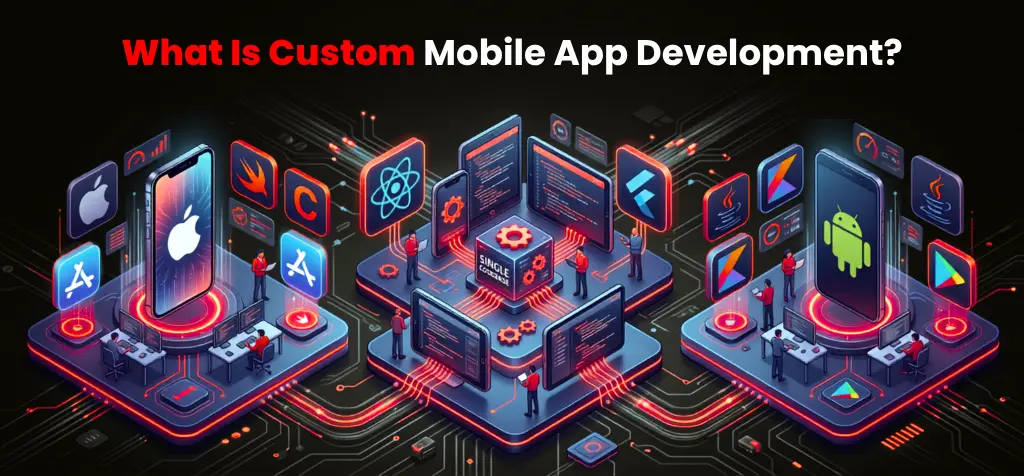
Application development is the process of planning, designing, building, testing, and deploying software that runs on a device, browser, or server to solve a specific problem or deliver a specific experience. At its core, it follows a structured lifecycle that moves from gathering requirements and designing the user experience all the way through coding, quality testing, and final release. Mobile application development focuses specifically on building products for smartphones and tablets, while software application development covers a broader range including desktop tools, web platforms, and enterprise systems. The platform your app runs on, whether iOS, Android, or a hybrid system that covers both, shapes every technical decision made throughout the entire build process.
Here is a quick breakdown of what separates each type:
- Web apps are accessible from any browser without installation
- Mobile apps offer offline access and direct device integration
- Enterprise apps connect teams, automate workflows, and manage data
- Hybrid apps combine web and native development for broader reach
- iOS and Android apps are built for specific platform performance
Types of Application Development

Understanding which type of application fits your business goals is the first real decision in any development project. Each approach serves a different purpose, budget, and audience.
Mobile Application Development
Custom mobile app development services fall into two main categories: business apps for internal operations and consumer apps for end users. Native apps are built specifically for one platform and deliver the best performance. In contrast, hybrid apps combine elements of both iOS and Android development into a single product that works across devices without doubling your build cost.
iOS Application Development
Custom iPhone app development gives businesses direct access to one of the most valuable user bases in the world. Apple users spend more, engage more, and stay loyal longer. Building within the Apple ecosystem means your app benefits from stronger security standards, optimized hardware performance, and a development environment built for consistency. When you hire mobile app developers with iOS expertise, you get a product that feels native, performs fast, and meets Apple’s quality standards.
Cross-Platform App Development
Cross-platform app development services let you build one application that runs on both iOS and Android from a single codebase. This approach cuts development time significantly and reduces overall project cost without forcing you to choose one audience over another. For businesses in competitive markets like New York, where speed to market matters, this approach gets your product live faster while still delivering a strong user experience across every device.
Hybrid Mobile App Development
Hybrid mobile app development sits between fully native and fully web-based development. It uses web technologies packaged inside a native shell, which means faster deployment timelines and lower upfront costs. This approach works especially well for startups and growing businesses in Florida looking to launch quickly, test their product with real users, and iterate without spending on two separate native builds from day one.
Web Application Development
Web application development covers everything from customer facing SaaS platforms to internal enterprise tools that teams use to manage operations. Unlike mobile apps, web apps require no installation and work across any device with a browser. Enterprise web apps connect departments, automate processes, and serve as the digital backbone for businesses managing large teams, complex workflows, or multiple client accounts at once.
- Real-time communication
- Faster customer support
- Easy access to products and services
- Convenient notifications and updates
Application Development Process (Step-by-Step Guide)

Requirement Analysis
This is where every successful project begins. The development team works closely with the client to understand business goals, define the target audience, and map out a clear product roadmap. Getting this stage right saves significant time and budget later in the process.
UI and UX Design
Before a single line of code is written, the entire user experience is designed and tested. Good app UI UX design services focus on how users move through the app, where they click, and what keeps them engaged. User experience optimization at this stage directly impacts retention after launch.
Development Phase
This is where the actual product gets built. Frontend interfaces, backend systems, databases, and third-party integrations all come together during this phase. Our custom mobile app development services cover every layer of the build, ensuring the product performs well across all target devices and platforms.
Testing and Quality Assurance
No app should go live without thorough testing. This phase covers functional testing, performance testing, security checks, and bug fixing across multiple devices and operating systems. A clean QA process means fewer problems after launch and a smoother experience for real users from day one.
Deployment and Launch
Once testing is complete, the app moves into production setup and app store release. This includes meeting platform guidelines for iOS and Android, configuring servers, and making sure everything runs cleanly under real-world conditions. A well-managed launch sets the foundation for strong early user adoption.
Maintenance and Updates
Launching the app is not the finish line. Mobile app maintenance services keep the product running smoothly after release through regular updates, performance monitoring, and feature improvements. A proper software support lifecycle ensures your app stays compatible with new devices and operating system updates over time.
Benefits of Application Development

Building an application is one of the most direct investments a business can make in its own growth. The returns show up across multiple areas of the business at the same time, from revenue and customer relationships to internal operations and long-term flexibility.
Business Growth and Revenue
Application development gives businesses a direct channel to acquire and convert customers without relying entirely on third-party platforms. Companies that go through digital transformation with a dedicated app report stronger customer acquisition numbers and higher average order values because the entire experience lives under their control.
Better Customer Engagement
Mobile application engagement consistently outperforms every other digital channel. Users who interact with a brand through an app visit more frequently, spend more time, and convert at higher rates. Strong user retention strategies built into the app like personalized content, loyalty features, and smart notifications, keep customers coming back on their own.
Operational Efficiency
One of the most underrated benefits of application development is what it does inside the business. Automation of workflows through a well-built app removes the manual processes that slow teams down every single day. Tasks that once required multiple people and hours of back and forth get handled automatically, freeing your team to focus on work that actually moves the business forward.
Scalability and Flexibility
A well-architected app scales with your business and doesn’t need a complete rebuild every time your needs change. Enterprise mobile solutions are built on solid foundations and can add features, grow to more users, and integrate with new systems as the business grows. Whether you begin with Android app development services and then transition to iOS or build cross-platform from the outset, the correct development strategy keeps your choices open.
Why Choose American App Coder for Application Development?
American App Coder delivers high-performance application development solutions built for modern business needs. From startups to growing enterprises, our team brings the right skills, strategy, and technology to every project we take on.
Expert Development Team
When you hire mobile app developers through American App Coder you get experienced professionals who have shipped real products across iOS, Android, and enterprise systems. Our application development company brings hands-on expertise to every stage of your build, from planning through final deployment.
Custom Development Approach
Every business has different users, different workflows, and different goals. Our custom mobile app development services are built around understanding your business first and writing code second. The result is an application that fits how your business actually operates rather than forcing your team to work around a generic product.
Industry-Focused Solutions
We have built applications across fintech, healthcare, and ecommerce, three industries where performance, security, and user experience directly affect revenue. Whether you need a secure fintech app, a compliant healthcare platform, or a high-converting ecommerce mobile app, our team understands the specific demands each industry brings.
End-to-End Development Support
Our involvement does not stop at launch. American App Coder provides full cycle application development from initial discovery all the way through post launch maintenance and support. Your app stays updated, secure, and performing well long after the first version goes live.
Final Thoughts

Most companies don’t realize how quickly application development is accelerating. AI and automation are not just add-on features anymore. They are increasingly becoming core to how apps work, personalize experiences and make decisions in real time. Built-in intelligent automation means that apps that used to require big backend teams to manage are now running smarter with fewer resources.
What is clear heading further is that businesses are becoming more dependent on mobile first systems, not less. Customer expectations are set by the best apps they use daily, and every other product gets measured against that standard. American App Coder helps businesses meet that standard with application development solutions that are built for where things are going, not just where they are today
Frequently Asked Questions
Application development is the end-to-end process of building software for mobile devices, web browsers, or enterprise systems to solve specific business or user problems.
A basic app typically takes 8 to 16 weeks. More complex applications with custom integrations or enterprise features can take longer depending on scope and requirements.
Native apps are built specifically for one platform like iOS or Android. Hybrid apps work across both platforms from a single codebase, making them faster and more affordable to build and maintain.
Costs vary widely based on complexity. A simple app can start around $10,000, while enterprise-level applications with advanced features can range from $50,000 upward depending on the scope.
Dedicated developers stay focused entirely on your project, understand your product deeply, and deliver more consistent results compared to generalist freelancers juggling multiple clients at once.
Yes. American App Coder builds native iOS, native Android, and cross-platform applications depending on what fits your business goals and budget best.