

There are currently over 9 million apps available across the App Store and Google Play combined, and the vast majority of them will never become a meaningful part of anyone’s daily life. According to Statista, global app downloads exceeded 257 billion in recent years, and that number continues to grow, yet user retention rates tell a very different story, with studies showing that nearly 25 percent of apps are abandoned after just one use.
Most get downloaded once, opened twice, and quietly deleted within the first week. That is not a technology problem. It is a planning problem. The difference between an app that users keep coming back to and one that disappears into a forgotten folder comes down to decisions made long before a single line of code is written, decisions about who the app is actually for, what problem it genuinely solves, and how every interaction is going to feel in the hands of a real person on a real device. The opportunity is enormous, but so is the competition, and navigating it successfully requires more than a good idea and a development budget. It requires a clear mobile app strategy, disciplined execution, and a commitment to continuous improvement after launch.
These mobile application tips are designed to give you a practical and honest guide to building something that actually works, covering everything from early planning and mobile app development services through to testing, optimization, and long-term growth.
Before You Write a Single Line of Code, Start With a Clear Strategy

The most expensive mistake in custom mobile application development is not a technical one. It is spending months and a significant budget building something without first confirming that real people actually want it and will use it consistently. A clear mobile app planning guide starts well before any design or development work begins, with honest answers to a few fundamental questions: Who is this app genuinely for? What specific problem does it solve that nothing else already solves well enough? What does success actually look like six months after launch? The mobile app development process that consistently produces successful products is one that treats strategy not as a preliminary formality but as the foundation on which everything else is built.
What a strong pre-development strategy should cover:
- Clearly defined business goals that the app is expected to support
- Thorough audience research, including real user interviews where possible
- Honest competitor analysis to understand what already exists and where the gaps are
- An MVP mindset that prioritizes the most essential features for the first release
- A clear success metric agreed upon before development begins, not after
10 Mobile Application Tips Every Business Should Follow
1. Solve One Problem Really Well

The apps that earn a permanent place on people’s phones are rarely the ones that try to do everything. They are the ones that do one thing so well that users cannot imagine managing without them. Before anything else, get brutally honest about the single problem your app solves and whether it solves it better than anything already available. That clarity becomes the foundation every other decision is built on, and it is one of the most important tips for successful mobile apps that most businesses skip past in their rush to start building.
What defining your core value proposition requires:
- A clear and specific problem your target user actually experiences
- Evidence that existing solutions are genuinely falling short
- A simple way to explain what your app does in one sentence
- User research that validates the problem before development begins
- A product vision that every team member can align around from day one
2. Build Around Exceptional User Experience
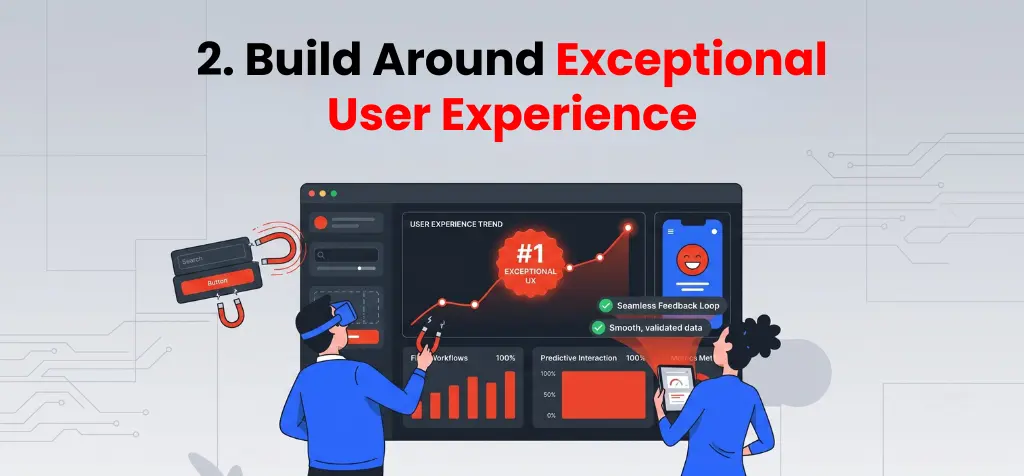
Users will forgive a lot, but they will not forgive an app that is confusing, slow, or difficult to navigate on their first visit. Mobile application best practices consistently place user experience at the top of every priority list for good reason. Your onboarding flow should feel effortless, your navigation should feel intuitive, your load times should feel instant, and every interaction should feel like the app already understands what the user is trying to do. Emerging technologies are making personalized and adaptive interfaces increasingly accessible, which raises the baseline expectation for what good UX actually looks like.
UX elements that directly affect whether users stay or leave:
- An onboarding experience that shows value within the first 60 seconds
- Navigation that requires no instruction to understand or use
- Accessibility features that make the app usable for every audience
- Load times under three seconds on standard mobile connections
- Consistent visual design that builds familiarity and trust over time
3. Choose the Right Development Approach

One of the earliest and most consequential decisions in any app project is choosing how it will be built. Native development delivers the highest level of platform integration and performance but requires separate codebases for iOS and Android, which increases both cost and development time significantly. Cross-platform mobile app development using frameworks like React Native app development allows a single codebase to serve both platforms, reducing time to market and keeping budgets more manageable without sacrificing the quality of the user experience in most cases. Hybrid approaches sit between the two and work well for businesses that need to move quickly without committing to a full native build on both platforms.
Key factors that should guide your platform decision:
- Where your target audience spends most of their time
- Your available budget and desired time to market
- The level of device hardware integration your app requires
- Whether you need to maintain one codebase or two long term
- The technical expertise of your development team or agency
4. Prioritize Speed and Performance From Day One
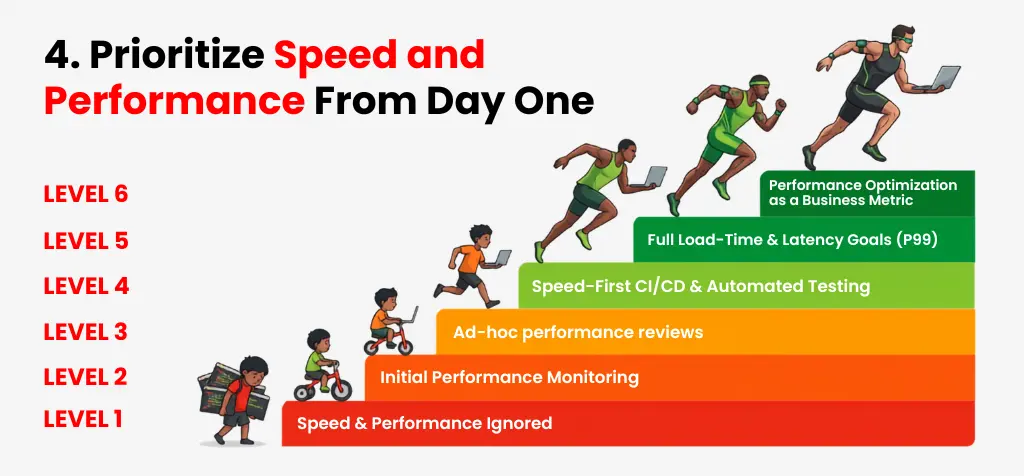
Performance is not a feature you add later. It is a foundation you build from the beginning, and getting it wrong early creates technical debt that becomes significantly harder and more expensive to resolve the further into development you go. Mobile app performance optimization starts with clean backend development for mobile apps, efficient API calls, smart image compression, and caching strategies that reduce load on the server and improve response times for the user. Every second of delay in load time increases the likelihood that a user will close the app and not come back.
Performance priorities that should be built in from the start:
- Optimized image and media files that do not slow page rendering
- Efficient API calls that retrieve only the data actually needed
- Caching strategies that reduce repeated server requests
- Clean and lightweight code that does not carry unnecessary dependencies
- Regular performance testing across different devices and network conditions
5. Never Compromise on Security

Security is the one area where cutting corners has consequences that go far beyond a bad review. A single data breach can permanently damage user trust and expose your business to serious legal and financial liability. Secure mobile app development means building authentication, encryption, and API protection into the architecture from day one rather than patching them in afterward. Secure mobile applications handle user data responsibly, communicate transparently about privacy, and stay current with evolving security standards as the threat landscape changes. API integration for mobile apps requires particular attention to ensure that every connection between your app and external services is protected against unauthorized access.
Security practices every mobile app should implement:
- Multi factor authentication for user account access
- End to end encryption for sensitive data in transit and at rest
- Secure and documented API integration with proper access controls
- Regular security audits and vulnerability testing throughout development
- A clear and honest privacy policy that users can actually understand
6. Test Before Every Release
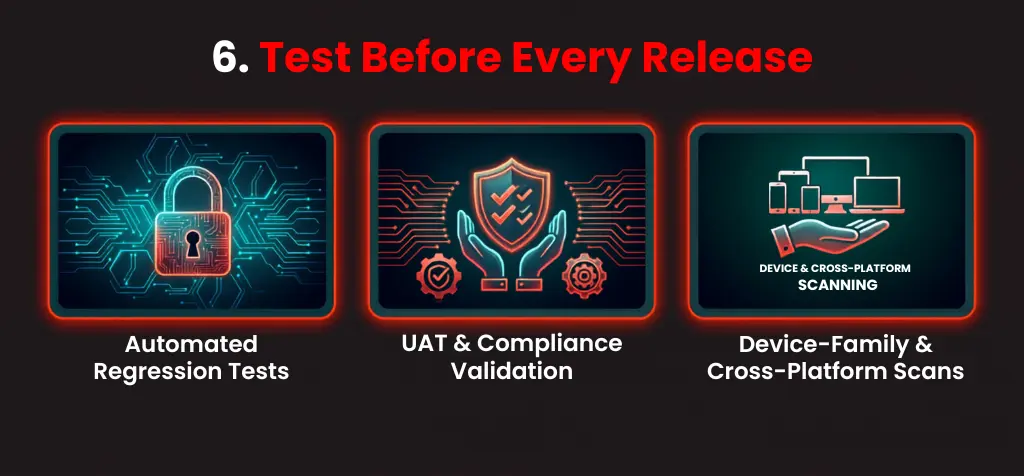
Launching an app with unresolved bugs is one of the fastest ways to generate negative reviews that follow your product for years. A thorough mobile app testing checklist covers functional testing to confirm every feature works as intended, performance testing to confirm the app holds up under real user load, usability testing to confirm that actual users can navigate it without confusion, and compatibility testing to confirm it performs consistently across different devices and operating systems. Mobile app testing strategies that are built into the development cycle rather than bolted on at the end catch problems earlier, cost less to fix, and result in a far more polished final product.
Testing categories that should be completed before every release:
- Functional testing across all core user journeys and edge cases
- Performance testing under varying load and network conditions
- Usability testing with real users who match your target audience
- Compatibility testing across the most commonly used devices and OS versions
- Regression testing to confirm new updates have not broken existing features
7. Integrate AI Where It Adds Real Value
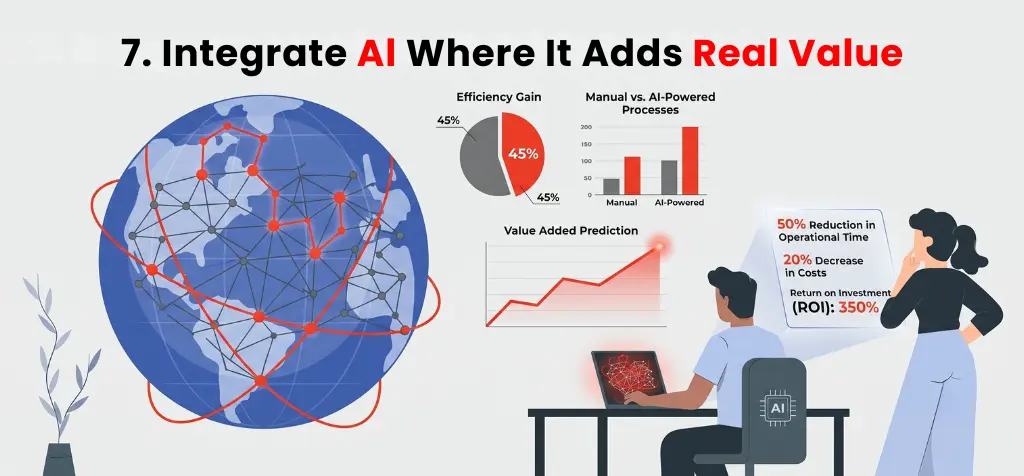
AI has moved well past the point of being a novelty feature, and businesses that are building it thoughtfully into their mobile products are seeing genuine results in engagement, retention, and operational efficiency. The keyword is thoughtfully. AI works best in mobile apps when it solves a specific user problem more effectively than a traditional solution would, whether that is a chatbot that handles common queries instantly, a recommendation engine that surfaces relevant content or products, predictive search that anticipates what the user is looking for, or automation that removes friction from a repetitive task. When you hire AI app developers who understand both the technology and the user experience implications, the result is AI that feels helpful rather than gimmicky.
Areas where AI genuinely improves mobile app experiences:
- Intelligent chatbots that resolve common support queries without human input
- Personalized recommendations based on individual user behavior and preferences
- Predictive search that surfaces relevant results before the user finishes typing
- Automated workflows that handle repetitive in-app tasks on behalf of the user
- Behavioral analytics that help you understand how users interact with your product
8. Optimize for the App Store
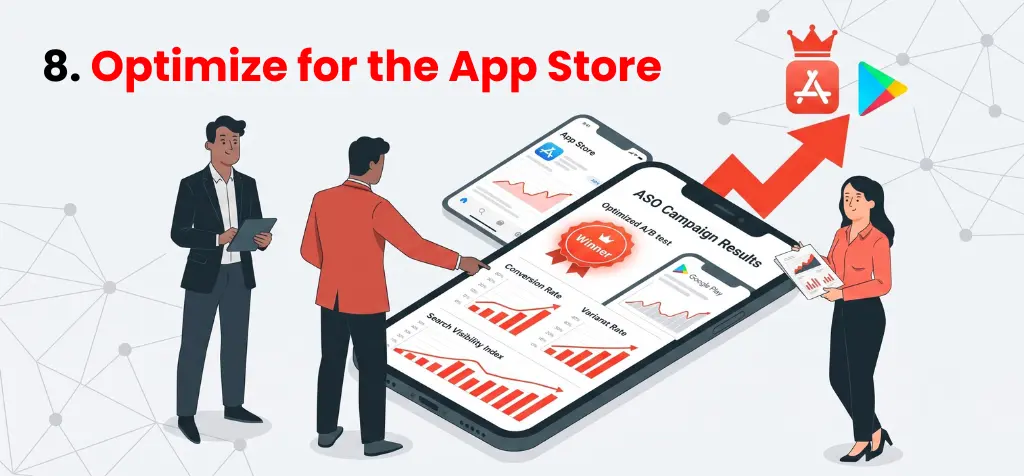
Building a great app and getting people to download it are two completely separate challenges, and a lot of teams put everything into the first while almost ignoring the second. App store optimization tips consistently point to the same fundamentals: a clear and keyword-rich app title and description, a distinctive icon that stands out in search results, high-quality screenshots that show the app in action rather than just displaying its logo, and a consistent flow of genuine user ratings that signal credibility to both the algorithm and potential downloaders. A well-optimized store listing can meaningfully increase your organic downloads without any additional advertising spend.
App store elements that directly influence download rates:
- A clear title and description that communicate the core value immediately
- A distinctive and professionally designed app icon
- Screenshots and preview videos that show real in-app experiences
- A consistent strategy for encouraging genuine user ratings and reviews
- Regular updates that signal to the store algorithm that the app is actively maintained
9. Build an App That Can Grow With Your Business

The decisions you make about architecture early in development will determine how easy or difficult it is to add features, handle more users, and integrate new technologies as your business evolves. Enterprise mobile app development projects almost always suffer when early-stage shortcuts come back to create bottlenecks at the point where the product is gaining real traction. Mobile app architecture best practices recommend building with modularity in mind, using cloud infrastructure that can flex with demand, and writing clean and well-documented code that a future developer can build on without having to reverse engineer everything from scratch.
Architecture decisions that protect your app’s long-term health:
- Modular code structure that makes individual components easy to update or replace
- Cloud infrastructure that adjusts capacity in response to user demand
- Well-documented APIs that make future integrations significantly easier
- A clear versioning strategy that manages updates without disrupting existing users
- Regular code reviews that maintain quality and catch technical debt early
10. Work With the Right Development Team
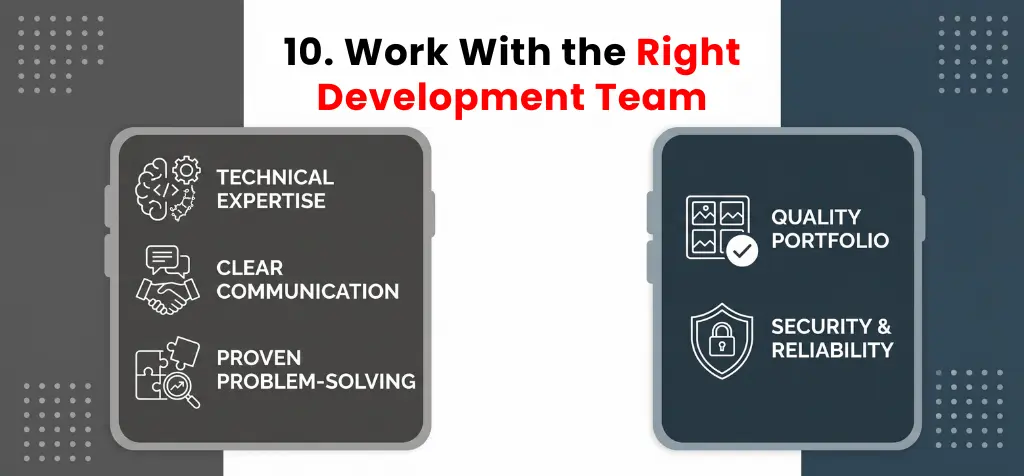
Every other tip on this list becomes significantly easier to execute when you are working with professional mobile app developers who have genuine experience, clear communication, and a track record of shipping products that perform in the real world. When you hire mobile app developers the right way, you are not just buying development hours. You are buying judgment, accountability, and the kind of proactive problem-solving that prevents small issues from becoming expensive ones. Review real portfolios, read verified client feedback, ask direct questions about the process and post-launch support, and pay attention to how the team communicates before the contract is signed.
What to look for when choosing a development partner:
- A portfolio of real shipped products across relevant industries
- Verified client reviews on independent platforms like Clutch or Google
- A clear and structured development process with defined milestones
- Honest communication about timelines, costs, and realistic outcomes
- Post-launch support and maintenance included or clearly available as an option
Native vs Cross Platform vs Hybrid: Which Is Right for Your Business?
Choosing the right development approach is one of the most important decisions you will make before a single line of code is written. Native mobile apps deliver the highest level of performance and platform integration but require separate builds for iOS app development and Android, which means more time and a higher budget. Cross-platform mobile app development using frameworks like native vs cross-platform vs hybrid app development allows one codebase to serve both platforms simultaneously, making it the preferred choice for startups and growing businesses that need quality products without doubling their development investment.
For businesses building an MVP or testing a concept before committing to a full build, hybrid development offers the fastest and most cost-effective path to getting something real into users’ hands. The right approach ultimately depends on your audience, your budget, your timeline, and how complex your product needs to be from day one. A conversation with an experienced development team before making that decision will save you considerable time, money, and frustration later in the process.
| Feature | Native | Cross Platform | Hybrid |
|---|---|---|---|
| Performance | Excellent | High | Good |
| Development Time | Longer | Faster | Faster |
| Cost | Higher | Moderate | Lower |
| Best For | Enterprise | Startups and SMBs | MVPs |
| Technologies | Swift and Kotlin | Flutter and React Native | Ionic |
Why Choose American App Coder for Mobile Application Development?
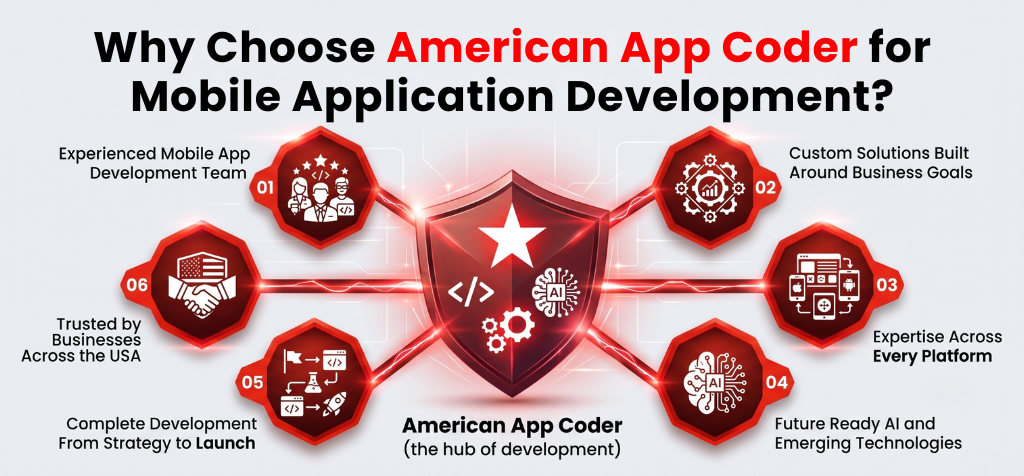
Building a successful app requires more than technical expertise. It requires strategic thinking, quality development, and a partner who understands how technology supports long term business growth. Here is what makes American App Coder the right team for your next mobile project:
Experienced Mobile App Development Team
Our professional mobile app developers bring real-world experience shipping products across multiple industries and platforms. As a trusted mobile app development company we combine technical depth with genuine product thinking, ensuring every decision made during development serves your users and your business goals equally well.
Custom Solutions Built Around Business Goals
We do not recycle templates or apply generic frameworks to unique problems. Our custom mobile application development process starts with a thorough understanding of your business, your users, and the outcomes you are working toward. Every solution we deliver through our custom software development services is built specifically for the problem it needs to solve.
Expertise Across Every Platform
Whether you need iPhone app development, a high-performing Android app development solution, or a cross-platform mobile app development approach that reaches both audiences from a single codebase, our team has the platform expertise to deliver a consistent and polished experience across every device your users are on.
Future Ready AI and Emerging Technologies
We help businesses integrate artificial intelligence into their mobile products in ways that genuinely improve the user experience rather than adding complexity for its own sake. When you hire AI app developers from our team, you get professionals who understand both the technology and the practical business value it needs to deliver.
Complete Development From Strategy to Launch
Our mobile application development services cover the full product lifecycle from initial discovery and UX strategy through to development, testing, deployment, and post-launch support. We also offer web development services for businesses that need a connected digital presence alongside their mobile product.
Trusted by Businesses Across the USA
As a leading mobile application development company USA businesses rely on for quality and consistency, we bring the same standard of work to every project, regardless of size or industry. Whether you are looking for mobile app development in USA or ready to hire mobile app developers in USA who take full ownership of outcomes, American App Coder is the team worth calling first.
Final Thoughts
The most important mobile application tips in this guide share one common thread: success starts long before a developer opens their code editor. It starts with understanding your user deeply, defining your value clearly, choosing the right platform thoughtfully, and building security, performance, and quality into every layer of the product from day one. Businesses that treat mobile application development services as a strategic investment rather than a technical transaction consistently produce apps that users return to, recommend to others, and genuinely rely on as part of their daily lives.
If you are ready to build something that actually performs, American App Coder brings the experience, process, and genuine commitment to quality that turn a solid idea into a high-performing mobile product. From early strategy and UX planning through to development, launch, and long-term support, our team manages every stage with the care and accountability your project deserves.
Frequently Asked Questions
Start with a clearly defined problem, validate it with real users before building, prioritize user experience over feature volume, and choose a development approach that matches your budget and timeline. Getting these fundamentals right early saves considerably more time and money than fixing them after launch ever will.
A straightforward app typically takes between 3 and 6 months from discovery to launch. More complex products with AI integration, custom backends, and multiple platform requirements can take between 6 and 12 months. Rushing the timeline almost always produces a product that needs significant rework within the first year.
It depends on your audience, budget, and how complex your product needs to be. Native delivers the highest performance and platform integration but costs more and takes longer. Cross-platform development using Flutter or React Native gives most businesses an excellent product at a lower cost and faster timeline without meaningful compromise on quality.
Optimize your images and media files, reduce unnecessary API calls, implement smart caching, keep your codebase clean and lightweight, and test performance across multiple devices and network conditions regularly. Performance issues caught during development cost a fraction of what they cost to fix after your app is already in users’ hands.
Because a single unresolved bug in the wrong place can cost you users, revenue, and reviews that follow your app for years. Thorough testing across functional, performance, usability, and compatibility dimensions before every release is the single most reliable way to protect the quality of the experience your users receive.
Review real portfolios of shipped products, read verified client reviews on independent platforms, ask direct questions about process, communication, and post launch support, and pay close attention to how the team responds before you sign anything. The right partner asks smart questions, gives honest answers, and treats your product like it matters to them.